Beneficiairies
173,600
Duration
01/01/26 > 31/12/26
Global budget
376 823 $
Multisector
Funding

Programme details
Supported by the United Nations High Commissioner for Refugees (UNHCR), this project builds on the work carried out by TGH since 2024. It involves close daily coordination with all the relevant Sahrawi ministries, and the capacity of their teams is regularly strengthened through the initiatives undertaken. The project comprises several broad categories of activity.
Public health
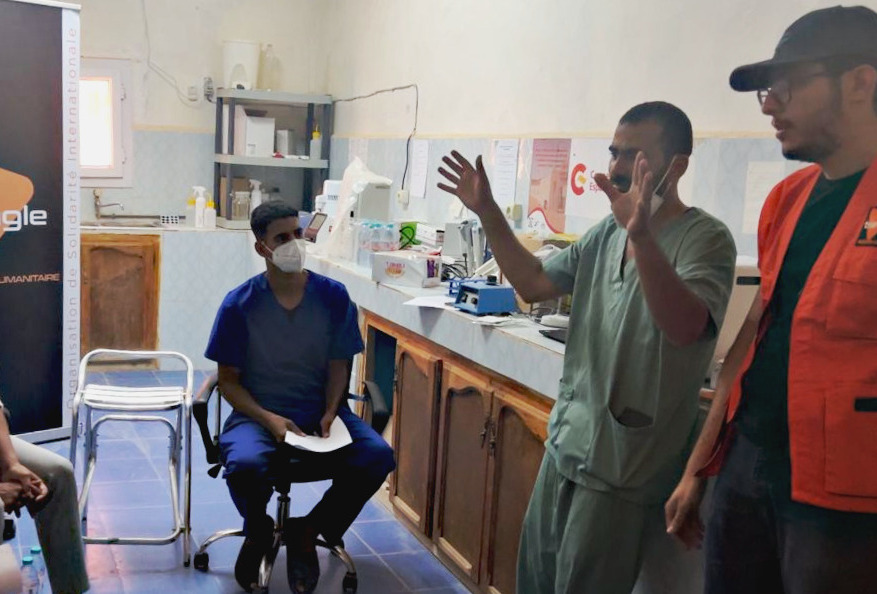
TGH is continuing construction work on the Aousserd hospital to ensure the continuity of high-quality healthcare services. The project also aims to enable the hospital to acquire the necessary technical equipment, materials and facilities for its gradual commissioning. This includes supplying all essential medical reagents and consumables to support the continued provision of basic tests essential for diagnosing and monitoring patients.
The haemodialysis unit, which is already in place, is being maintained by organising patient transport, carrying out essential medical assessments, and purchasing vital treatments for people with chronic kidney disease.
The aim of this support is to make the facility fully operational, strengthen the care capacity of Aousserd Hospital, and improve access to quality healthcare services for Sahrawi refugees.
At the same time, TGH is overseeing the operation of an existing shelter for cancer patients in Alger as part of the project. The facility is designed to accommodate patients who have been referred for specialist care that is unavailable in the camps, as well as their carers. It also facilitates access to treatment, medical examinations and necessary medication.
Water, sanitation and hygiene
TGH continues to operate the bleach production workshop, a key element in public health prevention and water safety in the Sahrawi refugee camps.
The project involves maintaining a minimum production level of 32° bleach, which is primarily intended for water treatment at five reverse osmosis plants, as well as for disinfecting healthcare facilities such as hospitals, clinics and the paramedical school. Production and distribution also enables the supply of packaged bleach to 33 institutions. This activity has a significant impact on public health and constitutes an essential preventive measure aimed at limiting health and epidemic risks.
Protection of Vulnerable People
TGH’s physiotherapy programmes, which have been running for many years, continue to be delivered in specialist facilities. These programmes include functional rehabilitation sessions, therapeutic follow-up, and support for people requiring rehabilitation care, such as bedridden elderly individuals and children with cerebral palsy or other motor disabilities.
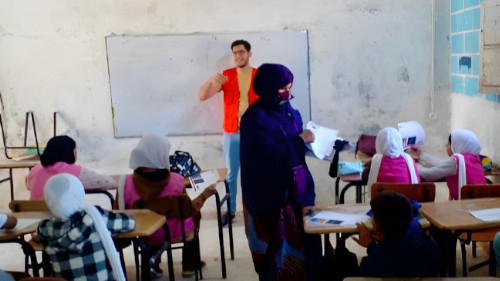
Twenty-eight specialist educators are deployed across special educational centres in various wilayas. They promote educational support, the development of functional abilities, adapted learning, and the social inclusion of children and adults with disabilities.
Social work teams comprising 65 staff have also been deployed to identify, refer and monitor vulnerable individuals. They help to maintain community-based protection mechanisms, monitor critical situations and improve access to social, health and educational services for beneficiaries.