- CAR, Vakaga Prefecture, Ouandja & Ouanda-Djallé
- CAR Humanitarian Fund (FH RCA)
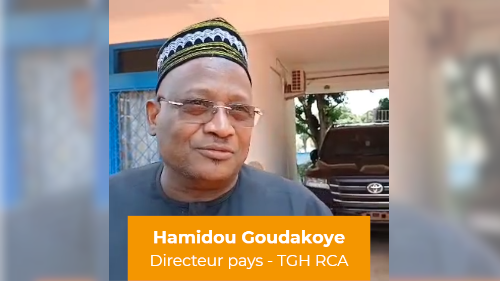
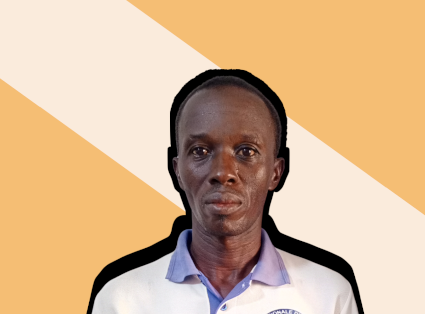
Spotlight on Our Partner: Vincent B. of ANEA
In Vakaga Prefecture, where communities have limited access to essential services, obtaining safe drinking water is a daily challenge.
Long-term limitations on access to safe drinking water are caused by the distance from infrastructure, recurring breakdowns of hand pumps and a lack of local capacity to maintain them.
To address this issue, Triangle Génération Humanitaire (TGH) is implementing a project in partnership with the National Agency for Water and Sanitation in Rural Areas (ANEA). The project aims to improve access to drinking water sustainably in the subprefectures of Ouandja and Ouanda-Djallé, with support from the Humanitarian Fund for the Central African Republic (FH RCA).
For Mr. Vincent Barangue, the 40-year-old head of the ANEA’s Vakaga prefectural office, this project represents a major shift in how the agency collaborates with humanitarian organisations.
This project is the first to construct water towers with public fountains in these two subprefectures. This represents a significant advancement for the local communities, who will benefit from an increased water supply, reduced waiting times at collection points, and fewer issues arising from the frequent breakdown of hand pumps.
Vincent B.
Beyond the technical achievements, Vincent B. emphasises the high quality of the collaboration established with TGH.
ANEA teams participated in joint assessment missions to identify structures to be rehabilitated or converted into drinking water supply systems, and to validate technical decisions.
By strengthening water infrastructure and involving the government’s technical services closely, the project helps to improve access to water sustainably for the most vulnerable populations, while building local capacity to ensure the long-term sustainability of the infrastructure.
However, Vincent B. believes that significant needs remain in this vast prefecture. He hopes that this type of intervention can be expanded to cover the entire Vakaga region, thereby strengthening ANEA’s capacity in water governance and equipping local teams with the necessary tools to monitor and maintain the infrastructure.
Setting up retail outlets for replacement parts in various sub-prefectures would enable communities to repair pumps more quickly in the event of a breakdown, ensuring more continuous access to drinking water and improving sanitary conditions for local populations.
We were truly involved in the decision-making process, which had not been the case during some previous interventions.
Vincent B.